
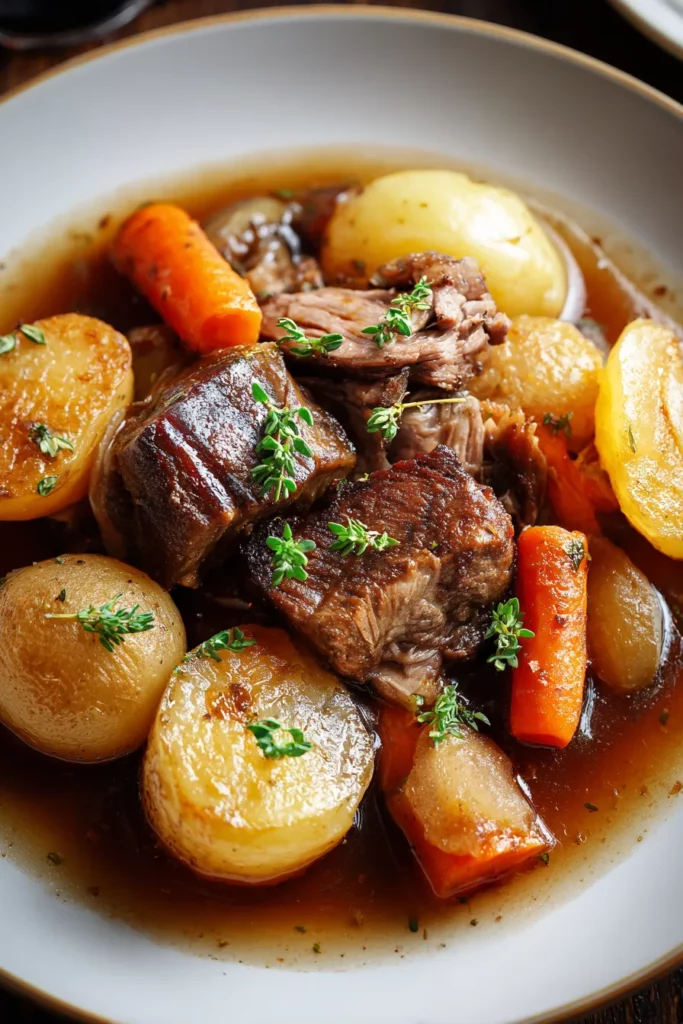
There's something deeply comforting about tucking into a bowl of Lancashire Hotpot on a chilly evening. Slow-cooked to perfection, this traditional dish hails from the rolling hills of northern England and has been warming hearts and bellies for generations. Tender chunks of lamb nestle beneath layers of waxy potatoes that turn soft in the steamy environment and crisp up beautifully when you lift the lid for that final bake. Every mouthful delivers a harmony of rich meatiness, subtle sweetness from the onions and carrots, and an earthy hint of fresh thyme and bay leaf. This is comfort food in its purest form—simple ingredients transformed by time, gentle heat, and a bit of love.
As a home cook, I’ve always adored how Lancashire Hotpot draws people to the table. It’s the kind of meal that encourages lingering conversation and second helpings. You’ll find that the kitchen fills with a gentle sizzle as you brown the lamb, followed by soft bubbling as the stock melds with flour and vegetables to form a luscious gravy. And when you finally pull that foil or lid back, a golden crust of butter-kissed potatoes will beckon you in. Whether you’re feeding a family on a Sunday night or serving friends at a cozy gathering, this hotpot is a guaranteed crowd-pleaser that tastes even better the next day.
KEY INGREDIENTS IN TRADITIONAL SLOW-COOKED LANCASHIRE HOTPOT
Before diving into the cooking process, let’s take a look at the stars of our hotpot. Each ingredient plays a crucial role, from building deep flavors to providing satisfying texture. Gather these essentials and you’re well on your way to creating a dish that’s hearty, soul-warming, and utterly memorable.
- Lamb neck fillet or shoulder
This cut is wonderfully marbled with fat and connective tissue that breaks down during slow cooking, gifting the stew with rich, unctuous flavor and succulent tenderness.
- Waxy potatoes
Their firm texture holds up beautifully beneath the lid, ensuring each slice retains structure while allowing the edges to crisp up when exposed to dry heat.
- Onions
Sliced onions provide natural sweetness and depth. As they soften and caramelize, they form the flavor base that ties the meat and vegetables together.
- Carrots
These add a subtle sweetness and vibrant color. Thinly sliced, they cook quickly and evenly, contributing to both flavor and visual appeal.
- Vegetable oil
A neutral oil for browning the lamb and sautéing the vegetables. It helps create those browned bits that add complexity to the finished gravy.
- Salt and freshly ground black pepper
Essential seasonings that enhance all the natural flavors. Pepper adds warmth, while salt brings out the savory notes in meat and vegetables.
- Plain flour
Used to thicken the cooking liquid into a silky gravy. It’s sprinkled over the vegetables to absorb fat and moisture before the stock goes in.
- Lamb stock
The lifeblood of the dish. A good-quality stock adds a deep, meaty richness and infuses every component with cohesive flavor.
- Fresh thyme
Woody and aromatic, thyme sprigs lend subtle herbal notes that cut through the richness without overpowering the dish.
- Bay leaf
This classic herb adds a layered earthiness. It’s removed before serving but leaves an unmistakable fragrance behind.
- Butter
Dotted on top of the potato layer, it melts into the crevices and promotes a golden, slightly crispy finish that makes every bite delightful.
HOW TO MAKE TRADITIONAL SLOW-COOKED LANCASHIRE HOTPOT
Bringing together these ingredients is a straightforward process that centers on gentle cooking and attention to stage-by-stage flavor development. Follow these steps to achieve a deeply flavored, tender hotpot that delivers on both comfort and tradition.
1. Preheat your oven to 160°C (320°F). Ensuring the oven is at the correct low temperature helps the meat break down slowly without drying out.
2. In a large ovenproof casserole or Dutch oven, heat the vegetable oil over medium heat. This provides a stable environment for browning and prevents scorching.
3. Season the lamb pieces generously with salt and freshly ground black pepper. Brown the lamb in batches to avoid overcrowding; transfer each batch to a plate once well-colored to develop deep, meaty flavors.
4. In the same pot, add the sliced onions and sauté until they’re softened and golden, about 5 minutes. Scrape up any browned bits from the bottom of the pot to incorporate that flavor.
5. Stir in the sliced carrots and cook for an additional 2 minutes, allowing them to release their natural sweetness and absorb the onion flavors.
6. Sprinkle the flour over the vegetables, stir well, and cook for 1–2 minutes. This step cooks out the raw flour taste and helps the gravy thicken later.
7. Gradually pour in the lamb stock, stirring constantly to avoid lumps. The liquid should turn glossy and start to thicken around the vegetables.
8. Return the browned lamb to the pot, nestle in the thyme sprigs and bay leaf, and stir to combine. This seasoning trio infuses the meat and vegetables with wonderful aromatic notes.
9. Layer the potato slices evenly over the surface, overlapping them for complete coverage. This seal keeps moisture in while allowing the top to brown.
10. Dot the top with butter and finish with a little more salt and pepper. This ensures a rich, golden crust once baked.
11. Cover the casserole with a tight-fitting lid or foil, then transfer it to your preheated oven.
12. Cook for 2 to 2½ hours, until the lamb is fall-apart tender and the potatoes are soft through to the middle.
13. For a beautifully golden finish, remove the lid for the last 20–25 minutes. This exposes the potato tops to direct heat and encourages light browning.
14. Remove from the oven, discard the thyme sprigs and bay leaf, and let the hotpot rest for a few minutes before serving to settle the juices.
SERVING SUGGESTIONS FOR TRADITIONAL SLOW-COOKED LANCASHIRE HOTPOT
When your hotpot emerges from the oven, steaming and fragrant, it’s time to think about the perfect accompaniments that will elevate each bite. A well-chosen side or garnish can balance the richness of the lamb and potatoes, adding freshness or tang. Consider textures and temperatures: something crisp or pickled contrasts beautifully with the velvety gravy, while crusty bread helps mop up every last drop. Below are a few of my favorite ways to serve this classic dish—each one adds a special touch to the table and makes your meal feel complete.
- Pickled Red Cabbage
The zingy acidity and bright color of tangy, pickled red cabbage provide a refreshing counterpoint to the hearty hotpot. Serve a small bowl on the side so guests can add generous or modest amounts to taste.
- Crusty Bread
A warm loaf of crusty artisan bread or a great sourdough boule is perfect for dunking. Tear off rustic pieces to sop up the rich gravy, ensuring not a single flavorful drop goes to waste.
- Green Vegetable Medley
Lightly steamed or sautéed green beans, peas, or kale with a drizzle of lemon juice bring a pop of color and crunchy freshness. The natural sweetness and crisp texture contrast the smooth hotpot.
- Creamed Horseradish
A dollop of creamed horseradish adds a gentle heat and sharpness that cuts through the richness. Offer it in a small dish so diners can experiment and find their ideal balance.
HOW TO STORE TRADITIONAL SLOW-COOKED LANCASHIRE HOTPOT
One of the great joys of Lancashire Hotpot is that it’s just as delightful the next day, making it a fantastic candidate for make-ahead meals or leftovers. To preserve flavor and texture, it’s important to cool and store it properly. Whether you plan to enjoy it tomorrow or freeze it for a rainy day, follow these simple tips to maintain that perfect balance of tender lamb, silky gravy, and crisp potato top.
- Refrigeration
Allow the hotpot to cool to room temperature, cover it tightly with a lid or cling film, and store it in the coldest part of your fridge. Use within 2–3 days for optimal taste and safety.
- Freezing
Portion the cooled hotpot into airtight containers or heavy-duty freezer bags, leaving a little headspace for expansion. Label with the date and freeze for up to 3 months. Thaw in the fridge overnight before reheating.
- Reheating on the Stovetop
Gently heat portions in a saucepan over low to medium heat, stirring occasionally. Add a splash of water or stock if needed to restore the gravy’s consistency and prevent sticking.
- Reheating in the Oven
Preheat to 160°C (320°F), transfer leftovers to an ovenproof dish, cover tightly, and bake until warm throughout, about 20–30 minutes. Remove the cover for the final 10 minutes to revive the crispness of the potato layer.
CONCLUSION
Recapping this journey into the heart of a classic Lancashire Hotpot, we’ve explored each step of preparing a dish that embodies tradition and comfort. From choosing the perfect cuts of lamb and layering waxy potatoes to coaxing out deep flavors with slow cooking, this recipe invites you to slow down, savor each aroma, and share warmth with those around you. Whether you’re a seasoned cook looking for a new favorite or someone diving into British cuisine for the first time, the combination of tender meat, silky gravy, and golden potato crust is a must-try. You can print this article, save it to your recipe binder, and revisit it whenever you need a hearty meal that feels like a hug from the kitchen.
Don’t forget to check out the FAQ below for answers to common questions about substitutions, timing tweaks, and advanced tips for achieving that picture-perfect potato top. If you decide to give this Lancashire Hotpot a try, I’d love to hear how it worked out for you. Drop a comment, share your tweaks, or let me know if you run into any questions along the way. Your feedback helps this recipe evolve and become even more accessible to home cooks everywhere.

Traditional Slow-Cooked Lancashire Hotpot
Description
This traditional Lancashire Hotpot features succulent lamb slow-cooked to perfection, enveloped in a rich stock, and topped with crispy potatoes for a comforting meal.
Ingredients
Instructions
-
Preheat your oven to 160°C (320°F).
-
In a large ovenproof casserole or Dutch oven, heat the vegetable oil over medium heat.
-
Season the lamb with salt and pepper. Brown the lamb pieces in batches to ensure a good color, then transfer to a plate.
-
In the same pot, add the onions and cook until softened and golden, about 5 minutes.
-
Stir in the sliced carrots and cook for another 2 minutes.
-
Sprinkle the flour over the onions and carrots, stir well, and cook for an additional 1-2 minutes.
-
Gradually add the lamb stock, stirring constantly to prevent lumps. The mixture should thicken slightly.
-
Add the browned lamb back into the pot, along with the thyme and bay leaf. Stir to combine.
-
Layer the potato slices over the lamb and vegetable mixture, overlapping them evenly.
-
Dot the top with butter and season with a little more salt and pepper.
-
Cover the casserole with a tight-fitting lid or foil, and transfer to the preheated oven.
-
Cook for approximately 2 - 2.5 hours, until the lamb is tender and the potatoes are fully cooked.
-
For a golden finish, remove the lid for the last 20-25 minutes of cooking, ensuring the potatoes crisp up slightly.
-
Remove from the oven, discard the thyme sprigs and bay leaf, and let it rest for a few minutes before serving.
Note
- Lancashire Hotpot is a traditional dish from northern England, perfect for warming you up on a cold day.
- Using waxy potatoes helps to preserve the shape during slow cooking.
- This dish can be prepared in advance and reheated, often tasting even better the next day.
- For added richness, consider adding a splash of Worcestershire sauce to the lamb stock.
- Serve with pickled red cabbage or crusty bread for a complete meal.