

There’s something truly magical about stir-frying thin ribbons of beef alongside crisp, colorful vegetables until every strand of noodle is perfectly coated in a glossy, savory-sweet sauce. When I first tried to recreate my favorite takeout beef chow mein at home, I didn’t expect it would become my go-to comfort meal—quick enough for a busy weeknight, yet impressive enough to serve to friends. Tender slices of flank steak—or your preferred sirloin—marinate in a blend of soy, oyster, and hoisin sauces, absorbing all that deeply umami flavor before hitting the hot wok. Meanwhile, carrots, bell peppers, napa cabbage, and fragrant garlic come together in a vibrant splash of color, adding satisfying crunch and freshness. Toss everything with springy chow mein noodles (or even ramen in a pinch), sprinkle on a few toasted sesame seeds and chopped green onions, and you’ve got a dinner that outshines any takeout box.
Beyond its mouthwatering taste, this homemade beef chow mein is a culinary adventure that invites a bit of theater in your own kitchen. You’ll hear the sizzle as the beef sears, see the steam rise when you add that savory sauce, and feel a sense of pride when you plate up something that rivals restaurant fare. It strikes all the right notes—savory, slightly sweet, with just a whisper of white pepper heat and a kiss of sesame oil aroma. At an intermediate difficulty level, it’s perfect for home cooks looking to sharpen their stir-fry skills without getting overwhelmed. In about 20 minutes of prep and 15 minutes of cooking time, you can transform simple pantry staples into an irresistible Asian noodle dish that clocks in around 380 kcal per serving. Whether you’re planning a cozy lunch or a lively dinner gathering, this beef chow mein delivers a delicious meal that’s sure to become a staple in your recipe rotation.
KEY INGREDIENTS IN HOMEMADE BEEF CHOW MEIN
Before we fire up our woks, let’s break down the star players that bring this dish to life. Each ingredient has a distinct role—some add depth, others bring crunch, and together they marry into a symphony of textures and flavors.
- Beef (flank steak or sirloin)
Thinly sliced against the grain, this cut becomes tender and juicy when marinated. It soaks up all those savory sauces and provides hearty, protein-rich meaty bites in every forkful.
- Soy sauce
Used both in the marinade and the final sauce, it lends essential umami and a deep savory backbone that ties the entire stir-fry together.
- Oyster sauce
This thick sauce brings a sweet, oceanic richness that deepens the flavor profile and gives the chow mein its signature glossy sheen.
- Hoisin sauce
Adding a hint of sweetness and a touch of warmth, hoisin balances the saltiness of soy sauce and elevates the overall complexity.
- Sesame oil
Just a teaspoon in the marinade delivers a toasty, nutty aroma that makes your kitchen smell like a bustling Asian street food stall.
- Vegetable oil
With a high smoke point, this oil is perfect for stir-frying at high heat, ensuring quick cooking without burning.
- Onion
Thinly sliced, it softens in the wok to release a gentle sweetness that enhances the depth of the savory sauce.
- Garlic cloves
Minced finely, garlic infuses the dish with a robust, aromatic punch that resonates in every bite.
- Bell pepper
Red, yellow, or green—these add vibrant color, sweetness, and a slight crunch to contrast the tender beef.
- Carrot
Julienned into matchsticks, the carrot brings earthy sweetness and a crisp texture that brightens the plate.
- Napa cabbage or bok choy
Chopped into bite-sized pieces, these leafy greens offer a mild, slightly peppery taste and a delightful leafy crunch.
- Chow mein noodles (or ramen noodles)
Whether you choose fresh or dried, these springy noodles absorb sauce beautifully and form the comforting base of the dish.
- Low-sodium soy sauce
Added with water, sugar, and white pepper, it forms the simple sauce that coats every element without overwhelming the palate.
- Water
Helps thin the sauce just enough so it clings to the noodles and veggies, making every strand glossy.
- Sugar
Balances the salty, umami notes with a hint of sweetness, ensuring a harmonious flavor profile.
- Ground white pepper
A subtle heat agent that melds seamlessly into the sauce without any black specks, giving a gentle warmth.
- Green onions
Chopped and sprinkled on top for a burst of fresh, oniony flavor and a pop of bright green color.
- Toasted sesame seeds (optional)
A final flourish that adds a light crunch and a contrasting nutty note to each mouthful.
HOW TO MAKE HOMEMADE BEEF CHOW MEIN
Let’s roll up our sleeves and dive into the heart of this recipe. Below, each step is detailed to guide you through marinating, stir-frying, and perfecting the balance between tender beef, crisp vegetables, and saucy noodles. By following these instructions, you’ll transform simple ingredients into a restaurant-quality meal with a mesmerizing sizzle and depth of flavor.
1. Marinate the beef
In a medium bowl, combine the thinly sliced beef with soy sauce, oyster sauce, hoisin sauce, and sesame oil. Use your hands or a pair of tongs to toss the beef until every piece is evenly coated. Cover and let it marinate for at least 15 minutes at room temperature, or up to 1 hour in the refrigerator for deeper flavor infusion.
2. Prepare the noodles
Bring a pot of water to a boil and cook the chow mein noodles according to package instructions. If using ramen, discard the seasoning packet first. Once tender, drain thoroughly and rinse under cold water to stop cooking. Set the noodles aside to keep them from sticking together.
3. Stir-fry the vegetables
Heat 1 tablespoon of vegetable oil in a large skillet or wok over medium-high heat. Add the sliced onion, minced garlic, bell pepper, and julienned carrot. Stir-fry for 2–3 minutes until they begin to soften and the garlic becomes fragrant. Add the chopped cabbage or bok choy and continue cooking for another 2–3 minutes until veggies are tender-crisp. Transfer the vegetables to a plate and set aside.
4. Cook the beef
In the same wok, add the remaining 1 tablespoon of vegetable oil. Spread the marinated beef in a single layer and let it sear without stirring for 1–2 minutes—this creates a beautiful caramelized crust. Then continue stir-frying for another 2–3 minutes until the beef is cooked through and no longer pink.
5. Combine the noodles and beef
Return the cooked noodles to the pan with the beef. Pour in the low-sodium soy sauce, water, sugar, and ground white pepper. Use tongs or two spatulas to toss everything thoroughly, ensuring that each noodle strand is coated in the savory-sweet sauce.
6. Add the vegetables
Slide the stir-fried vegetables back into the wok. Gently toss to mix all components until the colors and textures meld together, cooking for an additional 1–2 minutes to heat through.
7. Garnish and serve
Transfer the beef chow mein to serving plates or a large family-style platter. Sprinkle with chopped green onions and toasted sesame seeds for an extra layer of flavor and crunch. Serve immediately while it’s hot and aromatic.
SERVING SUGGESTIONS FOR HOMEMADE BEEF CHOW MEIN
Bringing homemade beef chow mein to the table is a celebration of textures, flavors, and vibrant colors. To elevate your meal and create a memorable dining experience, consider these serving suggestions. They’re designed to complement the savory-sweet dimensions of the chow mein and add variety to your plate.
- Offer a side of homemade chili oil in a small dish so each person can adjust the heat level to their taste. The spicy kick adds depth to every bite without overpowering the core flavors.
- Serve alongside crispy vegetable spring rolls with a tangy dipping sauce. The contrast between the crunchy wrappers and the saucy noodles makes for an exciting textural interplay.
- Pair with steamed pork or shrimp dumplings drizzled in a light soy-vinegar dressing. These delicate bites bring an elegant touch and extra protein for a more substantial feast.
- Present a platter of quick-pickled cucumbers or radishes for a refreshing palate cleanser. Their bright acidity cuts through the richness of the sauce and leaves you craving more.
HOW TO STORE HOMEMADE BEEF CHOW MEIN
Leftovers of this beef chow mein can be just as delightful the next day—if you store them correctly. Proper storage ensures that the beef remains tender, the vegetables stay crisp, and the noodles don’t turn mushy. Follow these tips to keep every element fresh and flavorful, whether you’re planning tomorrow’s lunch or batch cooking for the week.
- Refrigerate in airtight containers
Divide the chow mein into individual portions and seal them in airtight containers. This minimizes air exposure and keeps moisture locked in. Store in the fridge for up to 3 days, reheating gently before serving.
- Freeze for longer storage
Allow the chow mein to cool completely, then portion into freezer-safe bags or containers. Press out excess air before sealing. It will keep well for up to 2 months. Thaw overnight in the fridge before reheating.
- Separate components
If you prefer ultimate freshness, store the noodles and beef-veggie mixture in separate containers. This prevents the noodles from absorbing too much sauce. Combine just before reheating for a perfect texture.
- Reheat with a splash of liquid
When warming up, add a small dash of water or soy sauce to the pan. Heat over medium flame, stirring frequently. This revives the sauce’s sheen and ensures the noodles don’t dry out.
CONCLUSION
I hope you’ve enjoyed this deep dive into making homemade beef chow mein, a dish that truly captures the joy of wok cooking and the comfort of your favorite takeout—right from your own kitchen. We’ve covered everything from marinating tender strips of steak to stir-frying crisp veggies and topping off your creation with bright green onions and nutty sesame seeds. With a total time investment of just under 40 minutes, you’ll master the techniques behind vibrant, saucy noodles that carry sweet, salty, and umami notes in every forkful. Whether you’re cooking for family, sharing with friends, or simply indulging in a solo dinner, this recipe promises to satisfy cravings and become a trusty staple in your weeknight lineup. Feel free to print this article or save it for later—you can even pin it to your recipe board or drop it in your digital folder. Below, you’ll find a FAQ section to answer any burning questions you might have as you stir, sear, and savor.
I’d love to hear how your beef chow mein turned out and whether you added any fun twists of your own. Did you experiment with baby corn, snap peas, or an extra hit of sriracha? Your comments, questions, and feedback help this recipe evolve and inspire others in our cooking community. If you encounter any hiccups or need clarification on a step—like achieving the perfect sear or balancing the sauce—don’t hesitate to let me know. Cooking is all about iteration and sharing, so drop a note below and let’s chat about making your next chow mein even more unforgettable.
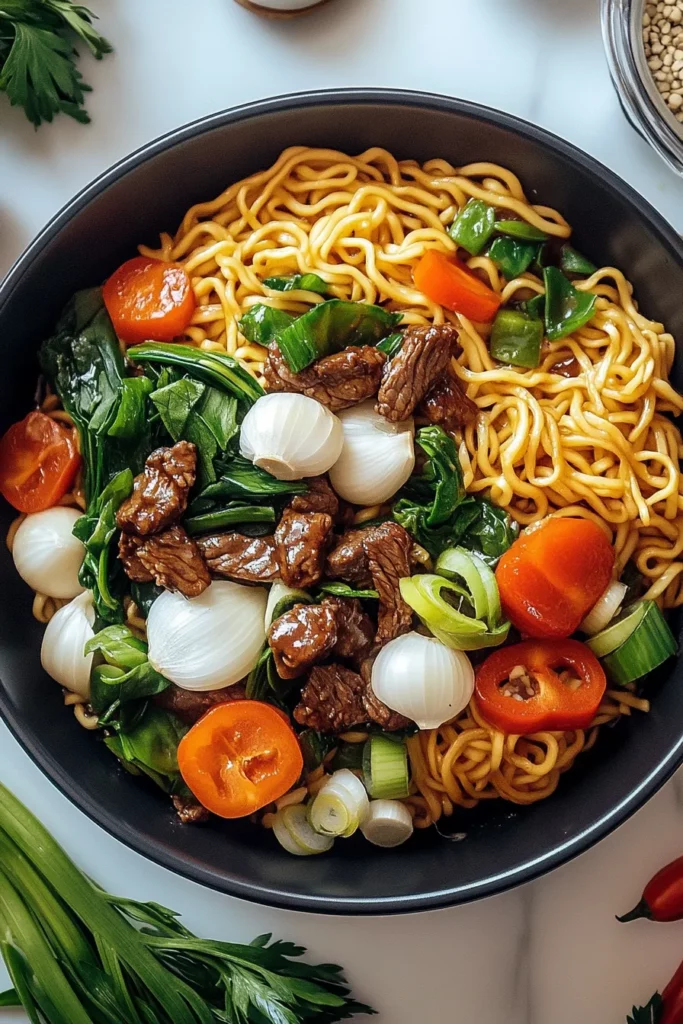

Homemade Beef Chow Mein
Description
This beef chow mein features tender marinated steak, crunchy bell peppers, carrots & cabbage tossed with savory soy-hoisin sauce and springy noodles. Quick, flavorful stir-fry that hits all the right savory-sweet notes.
Ingredients
Instructions
-
Marinate the beef: In a bowl, combine the thinly sliced beef with 2 tablespoons soy sauce, 1 tablespoon oyster sauce, 1 tablespoon hoisin sauce, and 1 teaspoon sesame oil. Toss well to coat, and let it marinate for at least 15 minutes (or up to 1 hour in the refrigerator).
-
Prepare the noodles: If you haven’t already, cook the chow mein noodles according to package instructions, drain, and set them aside. If you are using ramen noodles, discard the seasoning packet and cook the noodles, then drain and set aside.
-
Stir-fry the vegetables: Heat 1 tablespoon of vegetable oil in a large skillet or wok over medium-high heat. Add the onion, garlic, bell pepper, and carrot. Stir-fry for 2-3 minutes until they begin to soften. Add the cabbage or bok choy and continue stir-frying for another 2-3 minutes until the vegetables are tender-crisp. Remove the vegetables from the wok and set aside.
-
Cook the beef: In the same skillet or wok, add the remaining 1 tablespoon of vegetable oil. Add the marinated beef to the pan in a single layer and allow it to sear without stirring for about 1-2 minutes. Once the beef starts to brown, stir-fry for another 2-3 minutes until the beef is fully cooked.
-
Combine the noodles and beef: Add the cooked noodles to the pan with the beef. Pour in 1/4 cup soy sauce, 2 tablespoons water, 1 tablespoon sugar, and 1/2 teaspoon white pepper. Toss everything together, making sure the noodles are well coated with the sauce.
-
Add the vegetables: Return the stir-fried vegetables to the wok and toss to combine all the ingredients. Stir-fry for another 1-2 minutes, allowing everything to heat through and the flavors to meld.
-
Garnish and serve: Transfer the beef chow mein to serving plates and garnish with chopped green onions and toasted sesame seeds, if desired.
Note
- You can customize this recipe by adding other vegetables like mushrooms, baby corn, or snap peas for extra crunch and flavor.
- For a spicier version, add chili flakes or a splash of sriracha sauce while stir-frying the vegetables or beef.
- If you don’t have chow mein noodles, any Asian egg noodles or even spaghetti can work as a substitute.
- For extra depth of flavor, you can add a splash of fish sauce or a bit of ginger to the marinade or stir-fry.