

Chicken Chow Mein brings together a lively mix of textures, colors, and tastes that’ll have you grinning from ear to ear before you even take your first bite. Each forkful delivers tender ribbons of chicken mingling with thin, springy noodles, while crisp carrots and bell peppers add that satisfying crunch. Whether you’re looking for a quick weeknight dinner or a delicious way to impress friends, this recipe checks all the boxes: it’s fast, it’s vibrant, and it’s packed with the bold flavors of soy, oyster, and hoisin sauces. From the gentle sizzle of garlic hitting the hot wok to the final sprinkle of green onions, every moment in the kitchen feels like a small celebration of Asian-inspired home cooking.
In just about half an hour—fifteen minutes to prep, fifteen minutes to cook—you’ll transform simple pantry staples into a colorful stir-fry fit for lunch or dinner. The combination of shredded cabbage, julienned carrots, and sliced onion keeps the dish bright and refreshing, while a hint of sesame oil and white pepper rounds out the savory profile. This intermediate-level recipe is perfect for home cooks who love to experiment with stir-fry noodles and crave that homemade chow mein vibe without spending hours in the kitchen. Grab your wok, crank up the heat, and let’s turn these humble ingredients into a Chinese takeout favorite you’ll happily plate at home again and again.
KEY INGREDIENTS IN CHICKEN CHOW MEIN
Before rolling up your sleeves, let’s gather the vibrant ingredients that transform a simple stir-fry into a sensational Chicken Chow Mein experience. Each component plays its own starring role, coming together in perfect harmony to create that irresistible blend of juicy chicken, crisp veggies, and saucy noodles.
- Chicken breasts
Lean and tender, the thinly sliced chicken breast soaks up every bit of flavor from the sauces, providing the savory backbone of this dish.
- Chow mein noodles
These delicate, thin noodles absorb the savory sauce beautifully, offering an authentic chewiness that defines classic chow mein.
- Vegetable oil
Neutral in taste and high in smoke point, this oil ensures a smooth stir-fry without overpowering the other flavors.
- Onion
Sliced onions add natural sweetness and a subtle bite, building a flavorful base for the rest of the ingredients.
- Garlic
Minced garlic infuses the dish with aromatic depth and a gentle hint of spice, elevating the overall taste.
- Carrot
Julienned carrots contribute a vibrant color contrast and a satisfying snap that keeps each mouthful lively.
- Bell pepper
Thinly sliced bell pepper brings crispness and a mild, fruity sweetness to complement the soy-based sauces.
- Cabbage
Shredded cabbage wilts slightly during cooking, adding body and a tender-crunch component that ties everything together.
- Soy sauce
This umami-rich sauce lends essential saltiness and depth, forming the foundation of the stir-fry’s savory profile.
- Oyster sauce
With its rich, slightly sweet undertones, oyster sauce introduces complexity and a glossy finish.
- Hoisin sauce
A hint of hoisin sauce brings a subtle tangy sweetness that balances the dish’s savory notes.
- Sesame oil
Just a drizzle of sesame oil at the end imparts that toasty, nutty aroma that makes chow mein so irresistible.
- Sugar
A pinch of sugar enhances the natural flavors, balancing the salty and umami elements.
- White pepper
This mild, aromatic spice adds warmth without altering the dish’s color or overwhelming the palate.
- Chicken broth (or water)
A splash of liquid helps blend the sauces and keeps the noodles moist, preventing them from drying out.
- Green onions
Chopped green onions finish the dish with a fresh, oniony zing and a pop of color.
- Chili paste (optional)
For anyone seeking extra heat, a teaspoon of chili paste turns up the spice level for a bold, fiery kick.
HOW TO MAKE CHICKEN CHOW MEIN
Now that your ingredients are lined up, let’s talk about how to bring them all together in a dynamic stir-fry. From perfectly cooked noodles to that final garnish of green onions, each step is designed to maximize flavor and texture while keeping the process quick and satisfying.
1. Cook the chow mein noodles according to the package instructions. Bring a pot of salted water to a rolling boil, then add the noodles and cook until they are al dente (usually 3–5 minutes). Drain thoroughly and toss with a drizzle of oil to prevent sticking, then set aside.
2. In a large skillet or wok, heat 1 tablespoon of vegetable oil over medium-high heat. Add the sliced chicken breasts and stir-fry constantly for about 5–7 minutes, or until completely cooked through and lightly golden. Remove the chicken from the pan and set it aside on a plate.
3. Using the same pan, pour in the remaining tablespoon of oil. Add the onion, garlic, carrot, bell pepper, and cabbage, then stir-fry for 3–4 minutes. Make sure the vegetables remain crisp-tender, tossing them frequently so they cook evenly without losing their bite.
4. Return the cooked chicken to the pan. Add the cooked noodles, followed by soy sauce, oyster sauce, hoisin sauce, sesame oil, sugar, and white pepper. Toss everything together, ensuring the sauces coat the noodles, chicken, and veggies in a glossy layer of flavor.
5. Pour in the chicken broth or water and toss one more time to combine. Continue cooking for an additional 2–3 minutes, allowing the sauce to thicken slightly and cling to each strand of noodle.
6. Taste your chow mein and adjust seasoning as needed. If you prefer more umami, add a little extra soy sauce; if it needs brightness, a pinch of salt can help.
7. Remove the pan from heat and transfer the Chicken Chow Mein to a serving platter. Top generously with freshly chopped green onions and, if desired, a swirl of chili paste for that extra kick. Serve hot and watch everyone dig in!
SERVING SUGGESTIONS FOR CHICKEN CHOW MEIN
When your Chicken Chow Mein is sizzling off the stove, you’ll want to serve it in a way that highlights its vibrant colors and textures. Presentation can elevate the eating experience, turning a simple stir-fry into a memorable meal that feels both special and comforting. Whether you’re dishing it out family-style or plating individual portions, these serving suggestions will help you make each bite as delightful as possible.
- Serve on heated plates to keep the chow mein warm longer, then garnish with a sprinkle of toasted sesame seeds for an extra layer of crunch and visual appeal.
- Offer a side of pickled cucumbers or quick-pickled radish to introduce a zesty tang that cuts through the richness of the sauces and refreshes the palate.
- Accompany the dish with steamed dumplings or spring rolls for a multi-textured feast; the contrast of crispy wrappers alongside soft noodles creates a fun and satisfying mix.
- Provide small bowls of chili oil or Sriracha on the table so guests can dial up the heat to their liking, ensuring everyone enjoys their perfect level of spiciness.
HOW TO STORE CHICKEN CHOW MEIN
If you end up with leftovers—or if you’re planning to prep this dish ahead of time—proper storage is key to preserving its flavors and textures. While chow mein is best enjoyed fresh, you can still keep and reheat it without sacrificing too much quality. Use these tips to ensure each reheated serving tastes nearly as good as the moment it first came off the stove.
- Refrigerate in an airtight container: Allow the chow mein to cool slightly before transferring it to a sealed container. Store it in the fridge for up to 3–4 days, then reheat gently in a skillet over medium heat with a splash of water or broth to revive the sauces.
- Freeze in portioned servings: If you want to freeze, divide the dish into meal-sized portions and place them in freezer-safe bags or containers. Press out excess air, seal tightly, and freeze for up to 2 months. Thaw overnight in the fridge before reheating.
- Keep sauce separate when meal-prepping: For make-ahead convenience, portion out the cooked noodles and vegetables while storing the sauces in small, labeled jars. When it’s time to eat, combine and heat quickly in a skillet for that just-cooked taste.
- Label and date: Whether in the fridge or freezer, adding labels with the date will help you track freshness and ensure you enjoy your chow mein at its best quality.
CONCLUSION
We’ve taken you on a cheerful culinary journey through every aspect of creating sensational Chicken Chow Mein right in your own kitchen. From the very first sizzle of chicken hitting the hot wok to the final sprinkling of green onions, this recipe combines tender chicken, crisp vegetables, and perfectly sauced noodles for a fast and satisfying meal. With just 15 minutes of prep and 15 minutes of cooking, you’ll have a vibrant dish that’s ideal for both lunch and dinner. Remember the flexibility this recipe offers—swap in tofu or extra mushrooms for a vegetarian twist, toss in snow peas or bean sprouts for added crunch, or keep a bowl of chili paste nearby if you crave extra heat. It’s an intermediate-level stir-fry that feels impressive, yet it’s approachable enough to whip up on any busy weeknight.
Feel free to print this article and save it for future reference, so whipping up your own homemade chow mein becomes second nature. Below this conclusion, you’ll find a handy FAQ section to answer common questions and troubleshoot any stir-fry dilemmas you might have. If you give this Chicken Chow Mein a try, don’t hesitate to leave a comment or ask questions—you might share your own tips for customizing the dish or ask for help fine-tuning the seasoning. We love hearing about your cooking adventures, so drop your feedback or stories and let’s keep the conversation going in the kitchen!
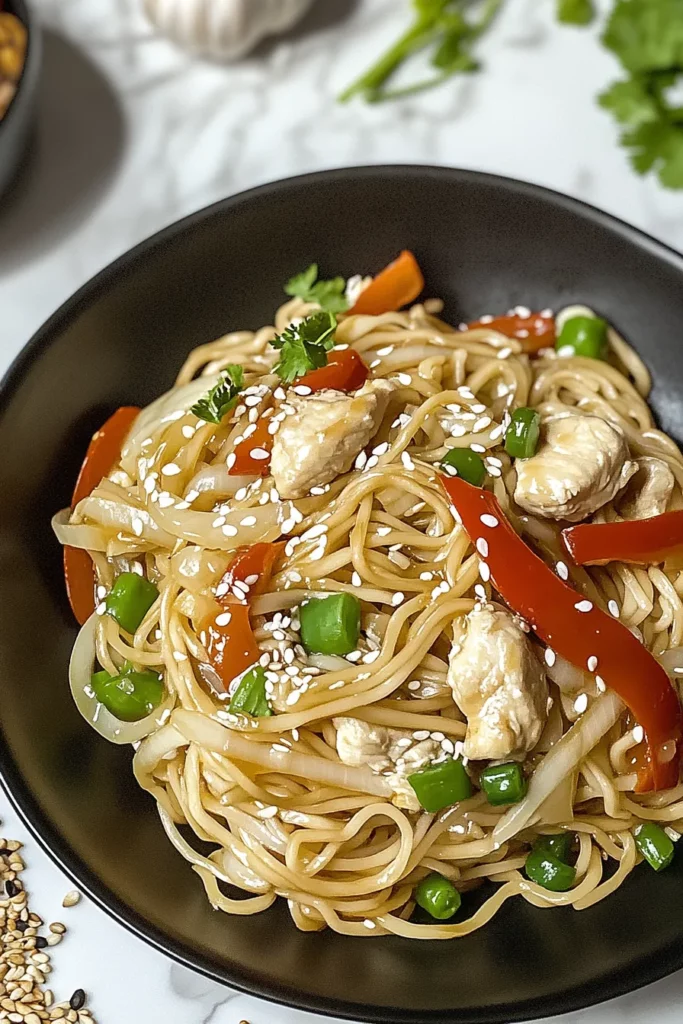

Chicken Chow Mein
Description
A colorful medley of thin noodles tossed with juicy chicken, crunchy carrots, bell peppers, and cabbage, all coated in a flavorful blend of soy, oyster, and hoisin sauces. Fast, satisfying, and perfect for any weeknight!
Ingredients
Instructions
-
Cook the chow mein noodles according to the package instructions. Drain and set aside, tossing them lightly with a bit of oil to prevent sticking.
-
In a large skillet or wok, heat 1 tablespoon of vegetable oil over medium-high heat. Add the sliced chicken breasts and stir-fry until fully cooked, about 5-7 minutes. Remove the chicken from the pan and set aside.
-
In the same pan, add the remaining tablespoon of oil. Add the onion, garlic, carrot, bell pepper, and cabbage. Stir-fry the vegetables for about 3-4 minutes, until they start to soften but remain crisp.
-
Return the cooked chicken to the pan. Add the cooked noodles, soy sauce, oyster sauce, hoisin sauce, sesame oil, sugar, and white pepper. Stir everything together well.
-
Add the chicken broth or water to the pan and toss everything to combine. Continue cooking for an additional 2-3 minutes, allowing the sauce to coat the noodles and vegetables evenly.
-
Taste and adjust seasoning as needed. You can add more soy sauce or a pinch of salt if desired.
-
Remove from heat and top with freshly chopped green onions. Serve hot, garnished with additional green onions or chili paste if desired.
Note
- For a vegetarian version, substitute the chicken with tofu or a mix of mushrooms and other vegetables.
- If you prefer your chow mein to have a bit of crunch, try adding some toasted sesame seeds or roasted peanuts as a garnish.
- You can also add other vegetables like snow peas, bean sprouts, or zucchini to customize the dish to your liking.
- This dish can be made ahead and reheated, though the noodles might absorb the sauce over time. Consider keeping the sauce separate if prepping for later.