Lemon Chickpea Orzo

by Emma Reed
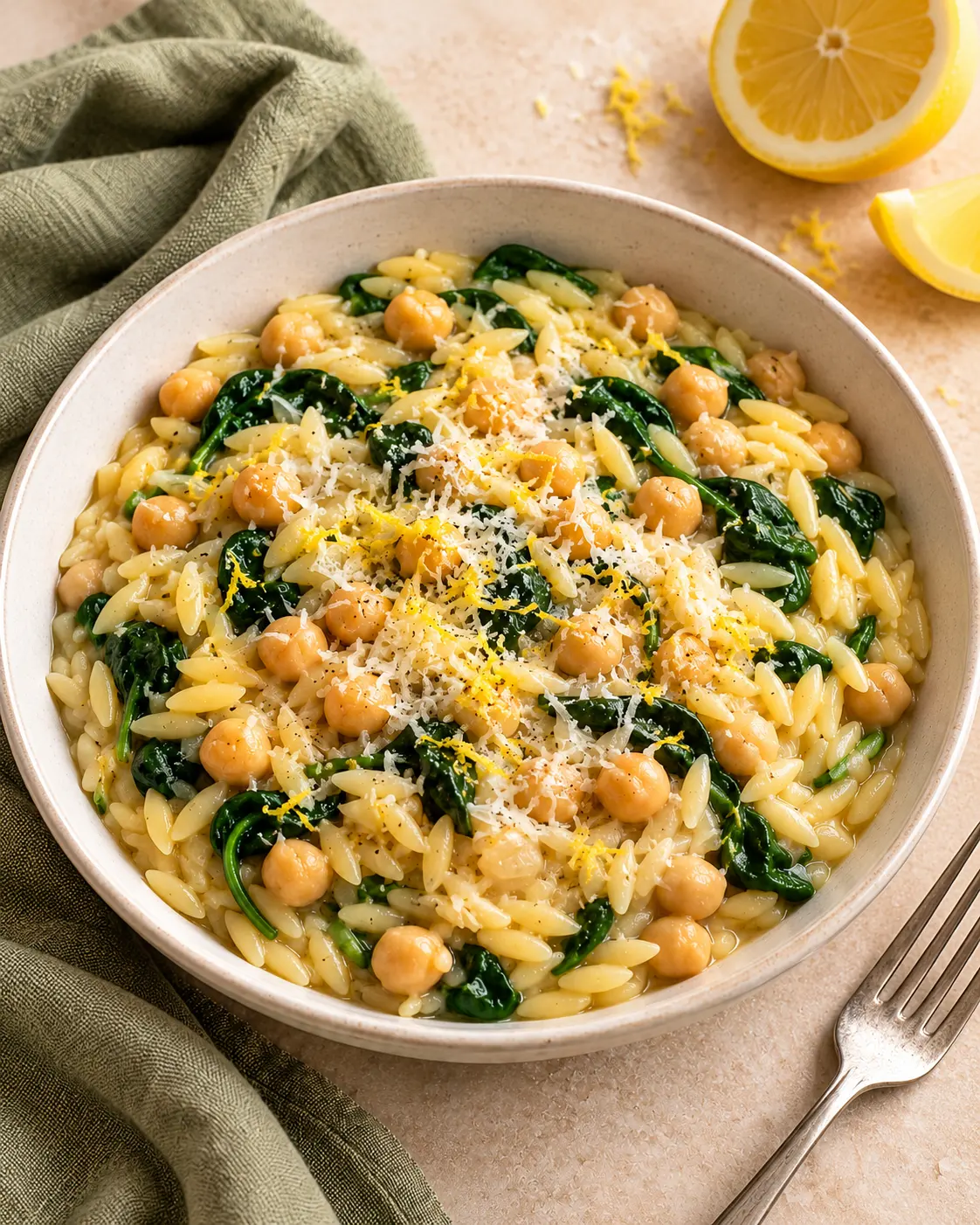
Lemon Chickpea Orzo brings tender pasta, nutty chickpeas and silky spinach together in one pan. The orzo cooks in vegetable broth, releasing enough starch to make a light sauce, while lemon zest and Parmesan give the finished dish a bright, savory flavor.
Spoon it into shallow bowls while it is still loose and creamy. A green salad or crusty bread makes a simple companion.
Recipe Highlights: Lemon Chickpea Orzo
- Flavor: Fresh lemon lifts the savory Parmesan and garlic, with tender chickpeas adding a gentle, nutty contrast to the orzo.
- Why Make It: The pasta cooks directly in the broth, so one pan handles the cooking and there is no separate pot to drain.
- Serving Suggestions: Serve in shallow bowls while the sauce is loose, with a green salad or crusty bread on the side.
Total Time: 30 mins Serves: 4 Cooking Method: Stovetop
Ingredients
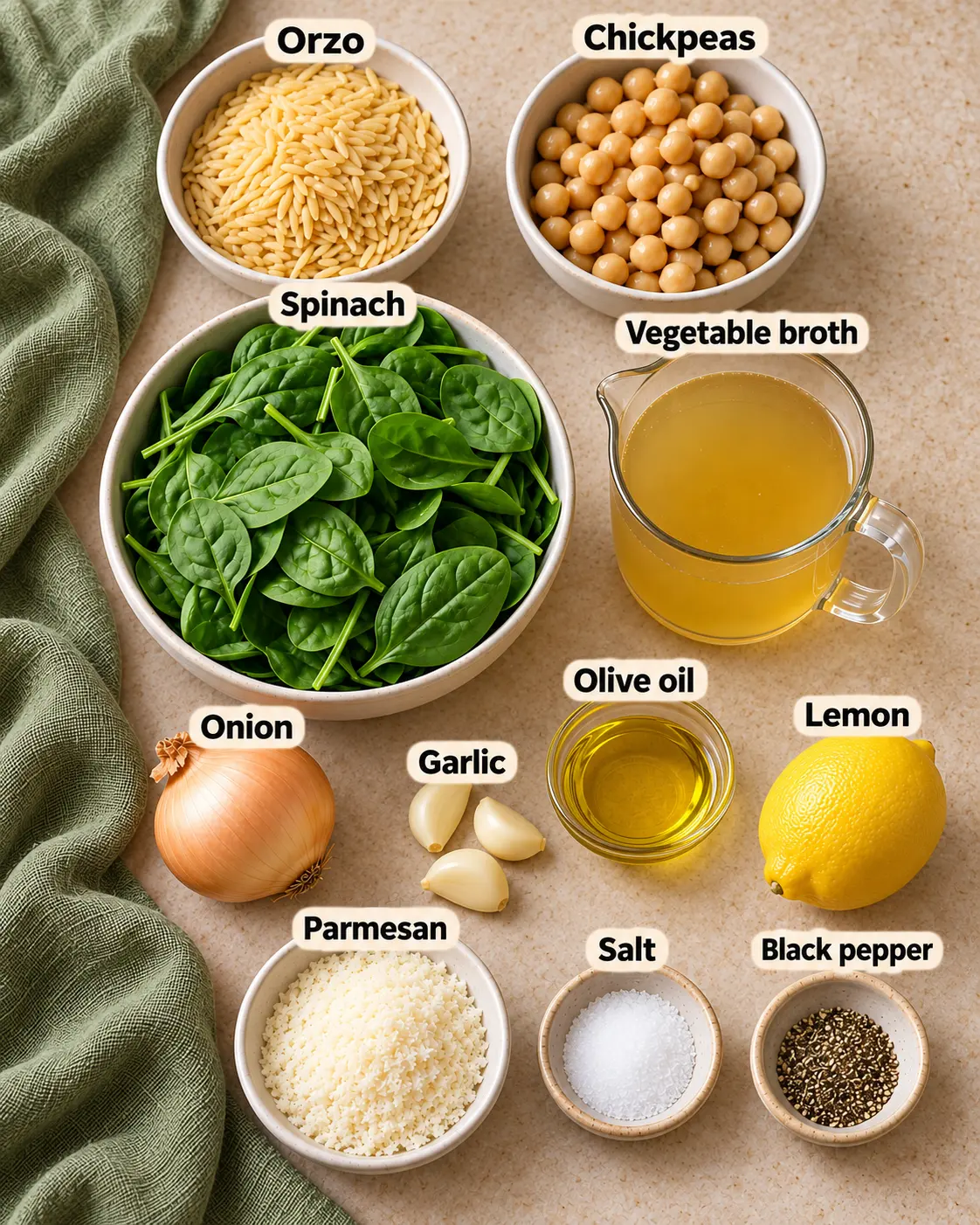
- Orzo: Use the pasta dry. It cooks in the broth and releases starch into the sauce; cooking it separately would change both the method and liquid balance.
- Chickpeas: Drain and rinse the canned chickpeas before adding them. They are already cooked, so they only need to heat through as the pasta simmers.
- Vegetable Broth: Start with 2½ cups and keep the remaining ½ cup nearby. Pasta brands and pan width affect evaporation, so add the reserve only as needed.
- Spinach: Add the baby spinach near the end in two batches. Fold each batch into the hot orzo until the leaves wilt and fit comfortably in the pan.
- Lemon: Zest the lemon before squeezing it. Measure the zest and juice separately, and stir them in off the heat for a fresh finish.
- Parmesan: Grate it finely so it mixes into the sauce easily. For a vegetarian version, choose a hard cheese labeled as made with vegetarian rennet.
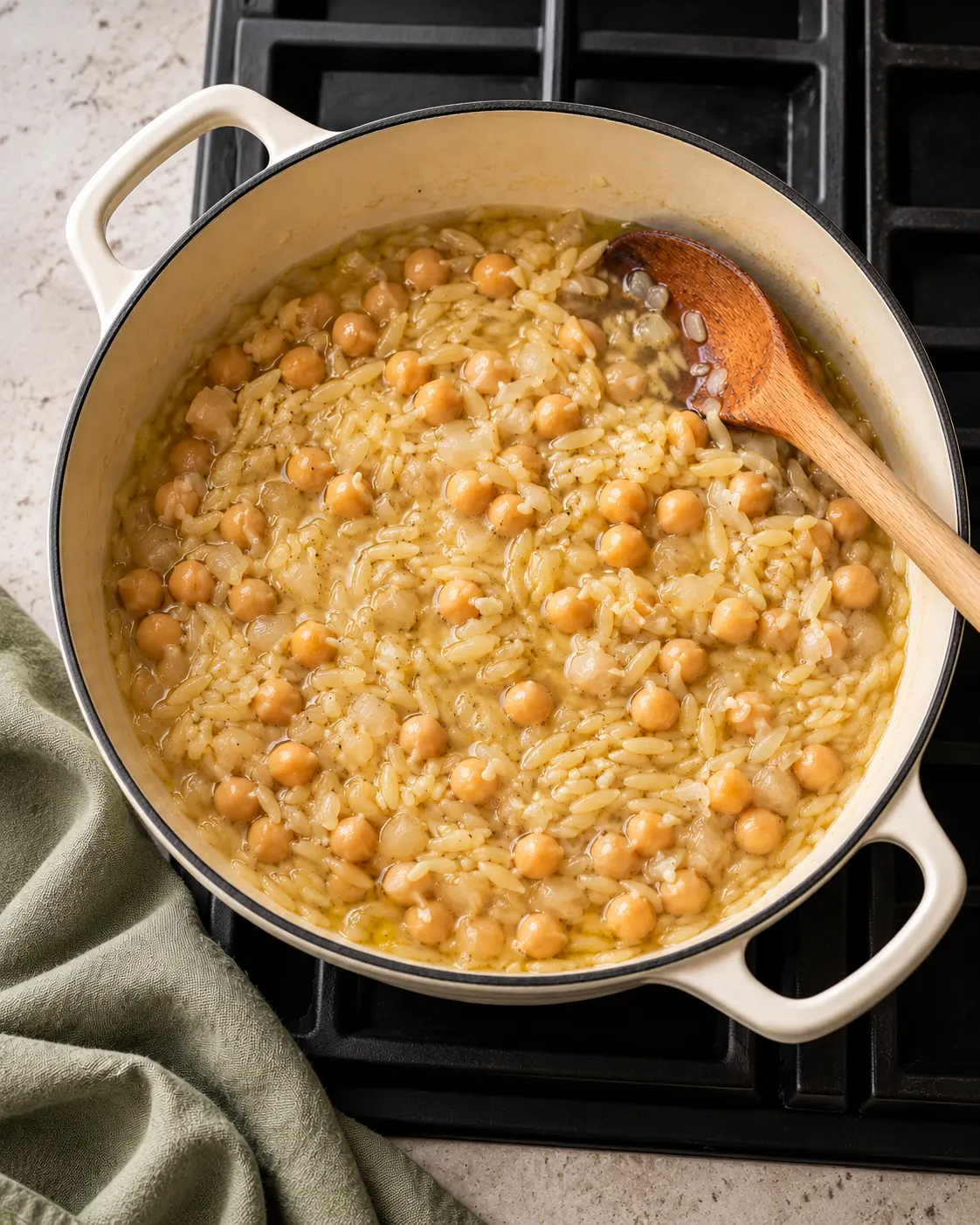
How to Make Lemon Chickpea Orzo
Heat the olive oil over medium heat, then cook the diced onion until it is soft and translucent. Stir occasionally so it softens evenly. Add the garlic at the end and cook briefly, just until fragrant rather than browned.
Stir the dry orzo into the onion mixture for about a minute so it is coated with oil. Add the drained chickpeas, the initial portion of broth, salt and pepper, keeping the remaining broth aside. Bring the mixture to a gentle boil.
Reduce the heat and simmer uncovered, stirring frequently across the bottom of the pan. Taste a few grains to check that the orzo is tender with a slight bite. If the pan becomes dry before the pasta is ready, add reserved broth a little at a time.
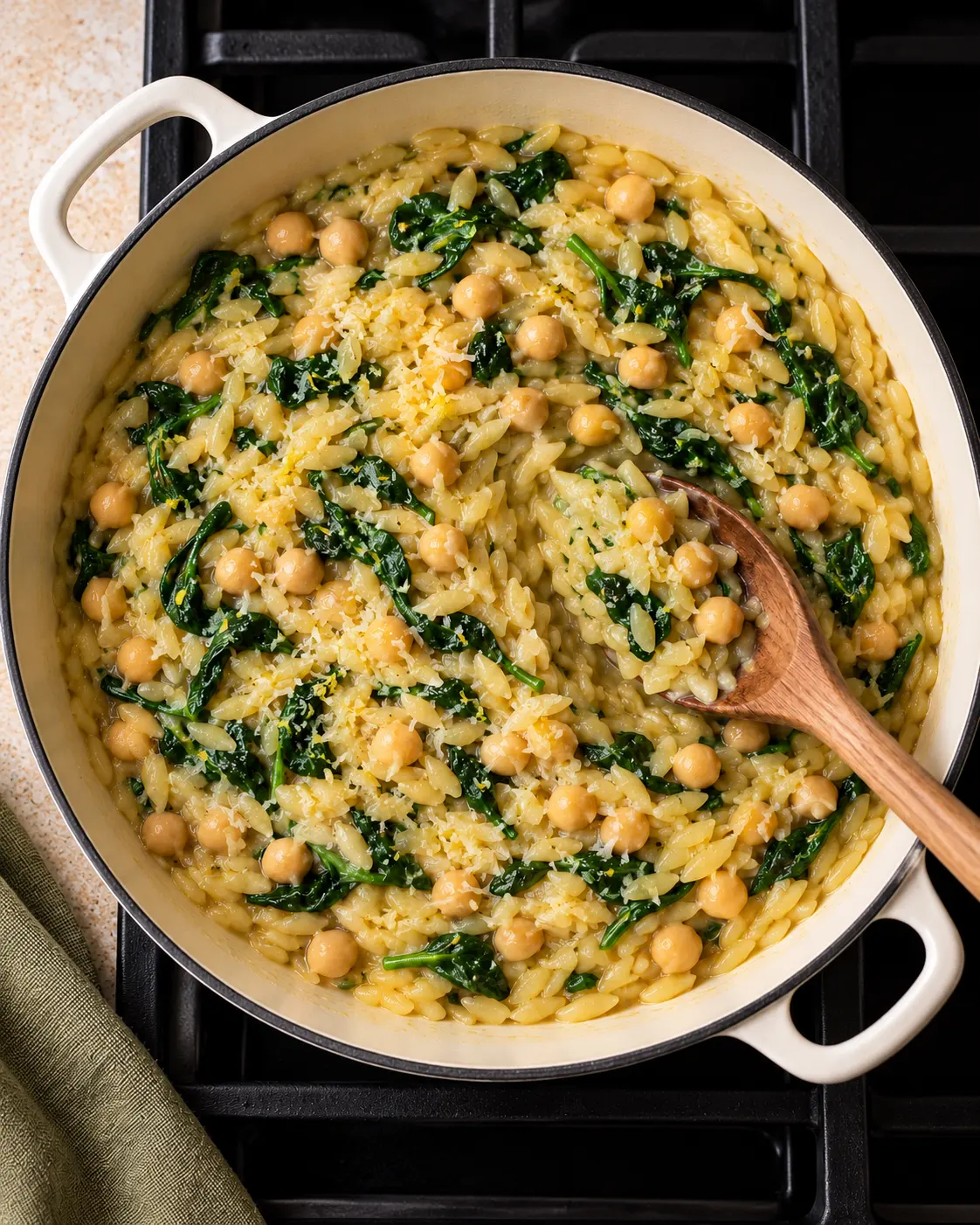
Fold in the spinach in two additions once the pasta is tender. Let the first batch wilt into the orzo before folding in the rest, and keep turning the leaves through the hot pasta until there are no large raw clumps. Turn off the heat.
Stir in the finely grated Parmesan, lemon zest and lemon juice off the heat. The finished orzo should look glossy and loose enough to spoon into bowls, with a light sauce around the grains. Add a splash of reserved broth if needed, taste for seasoning and serve promptly.
Tips for Creamy Orzo
- Stir Across the Base: Run the spoon over the bottom of the pan frequently so the small pasta grains do not catch as the broth reduces.
- Keep Some Broth Back: Add the reserved broth in small splashes. You can loosen a thick sauce more easily than reduce a pan that is too soupy.
- Finish Off the Heat: Turn off the burner before stirring in the finely grated Parmesan and lemon, then serve promptly while the pasta is glossy.
Storing and Reheating
Transfer leftovers into shallow containers and refrigerate within 2 hours of cooking, or within 1 hour if the room is above 90°F (32°C). Keep the refrigerator at 40°F (4°C) or below and use the refrigerated orzo within 3 days.
The pasta continues to absorb liquid while it sits, so refrigerated orzo will be thicker than the freshly cooked dish. Have a little broth ready when you reheat it; the aim is to return it to a loose, spoonable consistency rather than leave the grains in a dry clump.
Add a splash of broth to the portion you are reheating and stir to loosen and redistribute the pasta. Check that it reaches 165°F (74°C) throughout before serving. Judge the consistency as you stir and add a little more broth if it still looks too thick.
Lemon Chickpea Orzo
Lemon chickpea orzo with spinach and Parmesan, cooked in one pan for a bright, comforting dinner with a light, glossy sauce.
Ingredients
Ingredient amounts, equivalents and measured amounts in the method are multiplied. Use larger cookware or cook in batches; temperatures and timing estimates stay unchanged. Check doneness as you cook.
Instructions
Soften the onion. Heat the olive oil in a wide, deep sauté pan over medium heat. Add the diced onion and cook for 4 to 5 minutes, stirring occasionally, until softened and translucent. Stir in the garlic and cook for about 30 seconds, just until fragrant. The onion is soft and translucent; the garlic is fragrant rather than browned.
Toast the orzo. Add the dry orzo and stir for 1 minute so the grains are coated with the oil and onion mixture. Add the drained chickpeas, 2½ cups of the vegetable broth, salt and black pepper. Stir and bring to a gentle boil. The pasta is evenly coated, the chickpeas are mixed through, and the broth has reached a gentle boil.
Simmer until tender. Reduce the heat to maintain a gentle simmer. Cook uncovered for 10 to 12 minutes, stirring frequently and scraping across the base of the pan so the pasta does not stick. Taste a few grains. If the pan looks dry before the pasta is tender, add some of the reserved broth, a little at a time, and continue cooking. Pasta brands and pan width affect the timing. The orzo is tender with a slight bite and a little liquid still surrounds the grains.
Wilt the spinach. Stir in the spinach in two additions. Cook for 1 to 2 minutes, folding it through the pasta, until all the leaves have wilted. Turn off the heat. The spinach is evenly distributed and fully wilted, with no large raw clumps.
Finish with lemon and cheese. Off the heat, stir in the Parmesan, 1 teaspoon lemon zest and 2 tablespoons lemon juice. Add a splash of the remaining reserved broth if needed to keep the orzo loose and spoonable. Taste for seasoning and serve promptly in shallow bowls. The cheese is incorporated into a light sauce, with glossy pasta rather than a dry or soupy mixture.
Notes
- Preparation and cooking times are estimates. Check the pasta texture as it simmers; different brands and pan widths may need a little more time or broth.
- The recipe measures 3 cups broth, but you may not need all of the reserved ½ cup. Keep the finished pasta loose and spoonable.
- For a vegetarian version, check the cheese label for vegetarian rennet.
- Serve promptly. The sauce thickens as the pasta stands; a splash of the reserved broth will loosen it.
Equipment: A wide, deep 12-inch sauté pan; Wooden spoon or silicone spatula; Fine grater; Measuring cups and spoons; Colander
Recipe Questions
Do I cook the orzo first?
No. Add it dry to the pan after softening the onion and garlic. It cooks directly in the broth and helps thicken the sauce.
Do I use all 3 cups of broth?
Start with 2½ cups. Keep the remaining ½ cup nearby and add only what is needed if the pasta looks dry before it is tender or the finished sauce needs loosening.
When should I add the spinach?
Add it once the orzo is tender, in two batches. Fold it through for 1 to 2 minutes until the leaves are wilted, then turn off the heat.
Why does the sauce get thicker as it sits?
The pasta continues to absorb liquid. Serve promptly, or stir in a little of the reserved broth to bring back a loose, spoonable consistency.
Is this recipe vegetarian?
Use vegetable broth and a hard cheese labeled as made with vegetarian rennet. Traditional Parmesan may use animal rennet, so check the label.
Can I reheat a portion the next day?
Yes, if it was cooled and refrigerated promptly. Reheat with a splash of broth, stirring, until the center reaches 165°F (74°C).